Living with implants
Bruxism and Dental Implants — Protecting Your Implants If You Grind
This page is for anyone who grinds or clenches their teeth and either has dental implants or is considering them. It explains how bruxism affects an implant, how the risk is managed, and why grinding rarely rules treatment out. The core takeaway: bruxism is a manageable risk factor, and a night guard is the simplest way to protect your implant.
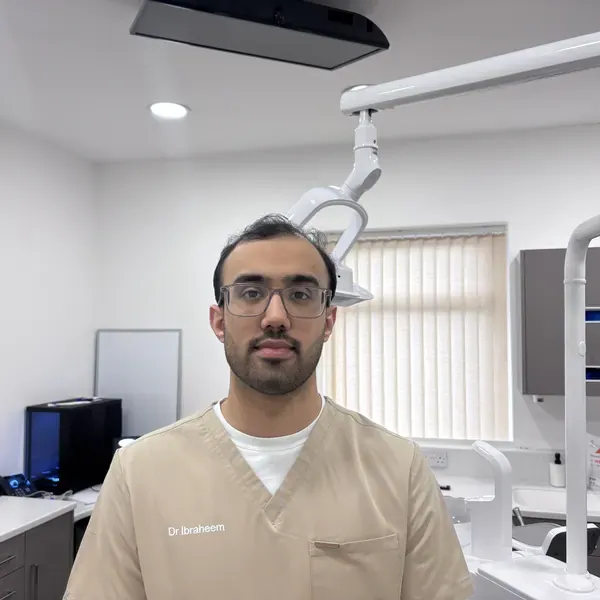 Clinically reviewed by Dr Ibraheem Ijaz, Principal Dentist · GDC 301711 · 500+ implants placed · Last reviewed August 2026
Medical disclaimer: This page is for general information only. It does not replace an examination or treatment by a dentist.
Can you have dental implants if you grind your teeth?
Yes. Bruxism does not rule out dental implants; it is a risk factor your dentist plans around from the first consultation.
Bruxism (teeth grinding and clenching) is common, and it comes in two forms: sleep bruxism, which happens unconsciously at night, and awake bruxism, a daytime clenching habit. Neither one disqualifies you from implant treatment. Current dental research treats grinding as a factor that raises the chance of mechanical problems with the restoration, rather than as a barrier to placing the implant itself.
In practice, when someone raises grinding at a consultation, the first job is to understand how it affects them and then explain the options honestly, rather than talk them out of treatment.
What matters is that grinding is identified before treatment and built into the plan. When your dentist knows you grind, decisions about crown material, the way your bite meets, and the protection you wear afterwards are all adjusted for it, so the whole plan accounts for the extra load your jaw generates. For most people who grind, implants remain a viable long-term option when treatment is planned with grinding in mind and protected once it is complete.
How teeth grinding affects a dental implant
Teeth grinding loads an implant with extra bite force, which mainly stresses the crown and the screw that holds it, not the implant itself.
An implant is a chain of parts: the fixture in the bone, an abutment on top, a small screw, and the crown you see and chew with. Grinding transmits repeated, heavy force down through that chain. The bone-anchored fixture is strong, so the strain usually shows first in the components above it. That is why the most common consequences of grinding are mechanical: chipping of the porcelain or ceramic on the crown, and loosening of the screw underneath. Understanding how bite force is transmitted from crown through implant to bone explains why heavy, uncontrolled loading is the problem to manage, and why spreading that force is the goal of everything that protects the implant.
Due a check-up? Book your implant maintenance visit.
What changes the bruxism risk to your implant
How much bruxism threatens an implant depends on how hard you grind, whether it happens during sleep, the crown material, and restoration size.
Sleep bruxism tends to matter most, because the forces generated at night are strong and you cannot consciously control them. Heavier, more frequent grinding raises the load; occasional light clenching raises it far less. The restoration itself also plays a part: a single crown behaves differently from a larger, multi-tooth restoration, and designs with unsupported extensions carry more stress. Crown material is a further variable, since some materials resist chipping better than others under grinding forces. Because these factors combine differently in every mouth, the level of risk is judged case by case rather than assumed.
How we protect implants in patients who grind
A custom night guard is the main protection; it separates the teeth during sleep and spreads grinding forces away from the implant crown.
A night guard, also called an occlusal splint, is a removable appliance made from an impression or scan of your mouth. Worn during sleep, it forms a cushion between your upper and lower teeth so the load of grinding is distributed rather than concentrated on one crown. Alongside the guard, your dentist can choose a hard-wearing crown material and fine-tune the way your bite contacts, both of which reduce stress on the restoration. Protection is also ongoing, not one-off: keeping to your dental implant maintenance schedule lets the practice check the screw, the crown, and the guard over time and act early if anything changes. A custom guard is a modest cost set against repairing or replacing a crown, and the practice can confirm current fees for your case.
Risks and limitations of grinding with implants
Even with protection, grinding can still cause mechanical problems such as a chipped crown or a loosened screw, which are usually repairable.
It is fair to be clear about what grinding can and cannot do. Evidence suggests bruxism increases mechanical and technical complications of implant restorations; its effect on whether the implant itself survives long term is genuinely debated among researchers, and the link between grinding and bone loss around implants is not well established. So the honest picture is a higher chance of fixable mechanical issues, not an inevitability of failure. If a crown does crack, the detail of repair versus replacement for a fractured implant crown sits on its own page, because the fix rarely involves the implant beneath. Between appointments, it helps to know the dental implant symptoms to watch for so you can report a change early, when it is simplest to resolve.
Clinically, the aim is not to remove every risk but to plan for it and take responsibility for the outcome, to the same standard a dentist would want for their own mouth.
Questions, answered
Frequently asked questions
Does grinding mean my dental implant will fail?
Not necessarily. Evidence suggests grinding raises the risk of mechanical problems more than outright implant loss, and the effect on long-term survival is debated. With a night guard and regular checks, many implants in people who grind can remain stable and functional.
Do I need a night guard if I already have an implant?
Usually yes, if you grind or clench. A custom guard worn during sleep protects the crown and screw from the extra load grinding creates. It is a small, removable appliance and the simplest way to lower the chance of a chipped crown or loosened screw.
How do I know if I grind my teeth?
Many people do not realise they grind. Common signs are morning jaw ache, headaches, worn or sensitive teeth, or a partner hearing grinding at night. Your dentist can often spot the wear patterns during a routine examination before you notice symptoms yourself.
Can a night guard be worn over an implant crown?
Yes. A custom night guard, or occlusal splint, is designed to fit over your natural teeth and any implant crowns together, cushioning them as one. It is made from an impression or scan of your mouth, so it sits comfortably and shields every tooth surface, including the restoration.
How much does a night guard cost?
A custom night guard is a small, one-off cost set against the price of repairing or replacing a crown. NHS availability is limited to situations where a dentist judges grinding is causing significant damage. Ask the practice to confirm the current fee for your circumstances.
What if my implant crown cracks from grinding?
Tell your dentist promptly. A cracked crown rarely means the implant beneath has failed, and it can often be repaired or replaced without disturbing the fixture. Acting early, rather than waiting, usually gives the best chance of a straightforward repair.
Many patients find the guard quickly becomes a simple part of their nightly routine.
If you have read this far, you likely have a clearer sense of whether grinding is a concern for you. The next step is a conversation that looks at your specific bite.
This page sits alongside the rest of our Deepcar Dental Care implant services.
Ready when you are
Book your implant assessment.
Online in under a minute, or call and speak to a real person.