Treatment
Tooth Extraction Before Implant: What to Expect and How to Plan
This page is for anyone who needs a tooth removed before a dental implant and wants to understand the timing. It explains how long you may wait between extraction and implant placement, why the socket and bone affect that decision, when a graft is added at extraction, and how to prepare. Some patients are suitable for same-day placement; others heal first.
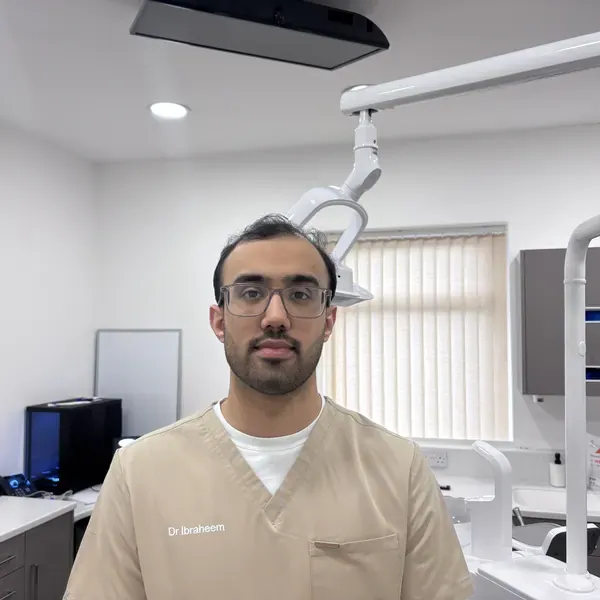 Clinically reviewed by Dr Ibraheem Ijaz, Principal Dentist · GDC 301711 · 500+ implants placed · Last reviewed August 2026
Medical disclaimer: This page is for general information only. It does not replace an examination or treatment by a dentist.
How long after a tooth extraction can you have a dental implant?
An implant can be placed on the same day as extraction, after 6 to 8 weeks, or after 3 to 6 months of healing.
The right window depends on the condition of the socket once the tooth is out, the amount and quality of surrounding bone, and whether any infection is present. There is no single rule that fits every patient. Implant dentistry uses a recognised framework that classifies placement by healing stage rather than by a fixed number of days, ranging from immediate placement at the time of extraction through to placement in a fully healed site. At Deepcar Dental Care, Dr Ijaz assesses the socket, the bone and the aesthetic demands of the site before recommending a pathway, so the timing reflects your specific situation rather than a default. The aim throughout is a stable foundation that lets the implant, the titanium post placed in the jaw to replace the tooth root, bond securely with the bone. Many patients who ask how long they will wait are really asking whether they can avoid a long stretch with no tooth. That concern is reasonable, and it is what the timing assessment is built to answer.
Why the socket and bone decide your implant timing
Timing depends on the condition of the socket, the surrounding bone, and how the area heals after the tooth is removed.
When a tooth is extracted, it leaves a socket bordered by the alveolar ridge, the bone that once held the root. This bone naturally remodels and reduces in volume during healing, and that change continues even after an implant is placed. An implant needs enough healthy, stable bone around it so the bone can fuse to the implant surface, a process called osseointegration, and hold it for the long term. If the socket walls are intact and the bone is sound, earlier placement may be possible. If the bone is thin, damaged or infected, healing time or grafting is usually planned first. Because this biological bonding decides whether an implant lasts, the biology of how titanium integrates with living bone explains why healing time is built into the plan.
The three timing pathways: same-day, early, and standard healing
There are three common pathways: same-day placement, early placement at 6 to 8 weeks, and standard placement at 3 to 6 months.
Same-day, or immediate, placement puts the implant into the fresh socket during the same appointment as the extraction. It can reduce the number of procedures and preserve tissue shape, but it suits only sockets with intact walls, no infection and enough bone for stability. Who qualifies is covered on our page about having an implant placed on the same day as extraction. Early placement, at roughly 6 to 8 weeks, lets the gum heal over the socket while much of the original bone shape remains. Standard placement, at around 3 to 6 months, gives the socket time to fill with new bone before the implant goes in, which suits sites with infection, larger defects or higher aesthetic risk. A further option, placement into a fully healed site beyond six months, is sometimes used but is less common, because the longer a site is left the more the ridge tends to shrink. Each pathway has trade-offs, and the choice is made on a case-by-case basis rather than by preference alone.
Ask whether this treatment fits your case.
Socket preservation and grafting at the time of extraction
Socket preservation is a graft placed into the socket at extraction to protect the bone shape for a future implant.
When a tooth is removed, some shrinkage of the ridge is expected. Placing graft material into the empty socket at the same appointment can limit that change, helping keep enough bone width and height for an implant later. It is often recommended when natural healing alone might leave too little bone, or when implant placement is being delayed by several months. Grafting at extraction does not commit you to any single timing pathway; it keeps your options open and can reduce the need for more involved bone work afterwards. The types of graft and how the procedure is carried out are explained on our page covering socket preservation after tooth extraction explained.
How to prepare for an extraction before an implant
Preparation includes a scan, a medical and medication review, a timing plan for the implant, and clear aftercare for the socket.
Before the extraction, a three-dimensional scan shows the bone and surrounding structures so we can plan the implant pathway in advance rather than decide it afterwards. We review your medical history and any medication, because some conditions and drugs affect healing. You will receive clear instructions on caring for the socket while it heals, what symptoms are normal and when to make contact. Because Dr Ijaz handles extraction, placement and restoration in-house, the plan stays with one clinician from start to finish, which can make the sequence smoother. To see how the full sequence fits together over time, read the full treatment timeline from first consultation to final crown. If you would prefer to understand your wider options first, permanent tooth replacement options gives the broader picture.
Ask whether this treatment fits your case.
Risks and limitations to understand
Every extraction and implant pathway carries some risk, and not every socket is suitable for same-day placement.
Immediate placement can be associated with gum recession at the front of the mouth, particularly where the gum and facial bone are thin, so it is chosen selectively. Leaving a site to heal fully before placement gives soft tissue more time but allows the ridge to resorb the most, which sometimes means a graft is needed to rebuild volume. Infection, smoking, uncontrolled medical conditions and inadequate bone can all influence both the timing and the outcome. None of these rule implants out by default; they are reasons a thorough assessment matters. In clinical practice, most timing decisions come down to the state of the bone rather than patient preference, and the cases that run most smoothly tend to be the ones planned before the tooth is removed.
Questions, answered
Frequently asked questions
Does the timing affect how successful the implant will be?
Timing is chosen to give the implant the best chance, not to compromise it. Evidence suggests implants placed in extraction sites can do well when the case is selected carefully, and survival is comparable to implants in healed bone. The right pathway depends on your socket and bone, which is why assessment comes first.
Is having an implant after extraction painful?
Most patients find the discomfort manageable, and many describe placement as no worse than the extraction itself. Local anaesthetic is used during the procedure, and any soreness afterwards is usually controlled with standard pain relief. If you feel anxious about the appointment, sedation options can be discussed with you beforehand.
Can I have a temporary tooth while I wait?
In many cases, yes. A temporary solution can fill the gap while the site heals before the implant is restored. Options include a removable partial denture or a temporary bridge, depending on the location and your bite. Whether one suits your situation is decided during planning, so you are not left with a visible gap unnecessarily.
What happens if I wait too long after extraction?
Leaving a socket to heal for an extended period allows the ridge to lose more width and height, which can reduce the bone available for an implant. This does not make treatment impossible, but it may make a bone graft more likely before placement. If an implant is the goal, planning the timing early keeps more options open.
Will I definitely need a bone graft?
Not every patient needs a graft; it depends on how much healthy bone remains around the socket. Some sites have ample bone and need none, while others benefit from socket preservation at extraction or grafting before placement. A scan at consultation shows the bone clearly, so the need for grafting is confirmed rather than guessed.
Is extraction before an implant available on the NHS?
Tooth extraction is available on the NHS, but dental implants are not routinely funded and are reserved for specific medical needs. Most patients in Sheffield seeking an implant after extraction access placement privately. Your dentist can explain which parts of your treatment may fall under NHS care and which would be private.
Ready when you are
Book your implant assessment.
Online in under a minute, or call and speak to a real person.