Treatment
Dental Implant Treatments at Deepcar Dental Care
This page is for anyone missing one tooth, several teeth, or a full arch who wants every implant treatment option in one place. It briefly explains the fifteen implant procedures and care stages available at Deepcar Dental Care and links to full detail on each. The core takeaway: there is usually an implant option suited to your situation, confirmed by clinical assessment.
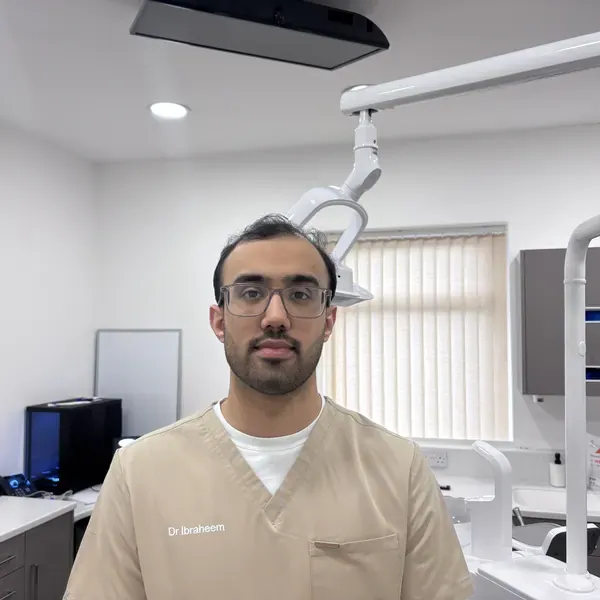 Clinically reviewed by Dr Ibraheem Ijaz, Principal Dentist · GDC 301711 · 500+ implants placed · Last reviewed August 2026
Medical disclaimer: This page is for general information only. It does not replace an examination or treatment by a dentist.
What dental implant treatments are available?
Dental implant treatments range from replacing a single tooth to restoring a full arch, plus the preparatory and aftercare stages. Each implant is a titanium fixture placed in the jawbone to support a crown, bridge, or denture. Every option below is part of the implant service at our dental implant clinic, planned and placed in-house by an experienced clinician, with maxillofacial support from Mohammed Anabtawi for the most complex cases.
In practice, choosing between these treatments is rarely something patients do alone. The aim at the first appointment is to understand your situation and explain every suitable option honestly, rather than steer you toward one.
The implant treatments we offer
Deepcar Dental Care offers fifteen implant treatments and care stages, from single-tooth replacement to full-arch restoration. Each suits a specific clinical situation; follow any link for the complete explanation.
- Single tooth implant. Replacing one missing tooth with a single tooth implant preserves the surrounding bone and neighbouring teeth.
- Multiple implants. For two or more gaps, several missing teeth implants can restore a section using individual implants or an implant bridge.
- All-on-4. All-on-4 full arch treatment replaces a whole arch on four implants, often as a fixed bridge.
- All-on-6. A six implant full arch restoration adds stability for patients with sufficient bone.
- Implant-supported dentures. Choosing implant dentures vs full dentures gives a removable option held securely by implants.
- Mini implants. Narrow-diameter mini implants for dentures can help when standard fixtures are not feasible.
- Bone graft. A dental bone graft procedure rebuilds bone so an implant can be placed where there is too little.
- Sinus lift. The sinus lift procedure creates enough bone height for implants in the upper back jaw.
- Immediate placement. An immediate dental implant can be placed on the same day as extraction when conditions allow.
- Implant crown. The implant crown is the visible restoration, and implant crown types vary by material and attachment.
- Replacing a failed implant. replacing a failed dental implant involves re-assessment and, where appropriate, a second attempt.
- Zygomatic implants. For severe bone loss, zygomatic implants anchor into the cheekbone instead of the jaw.
- Sedation. sedation for dental implants supports anxious patients through treatment.
- Life with implants. Our guide to life with implants covers what to expect during adaptation and how to care for implants long term.
- Extraction before an implant. Where a tooth must come out first, tooth extraction before a dental implant explains the timing.
Ask whether this treatment fits your case.
Which implant treatment is right for you?
The right treatment depends on how many teeth are missing, your bone and gum health, and your general health. Most adults are suitable in principle, but suitability is confirmed only by clinical assessment, including an examination and a 3D scan. Some patients need a preparatory step such as a bone graft before placement. Costs differ by treatment, and you can review what is included in a dental implant cost quote before your consultation.
Questions, answered
Frequently asked questions
How many dental implant treatments are there?
There is no single number, but the main options fall into around fifteen procedures and care stages. These span single-tooth replacement, multiple-tooth restoration, full-arch solutions, preparatory surgery such as grafting, and supporting care like sedation and aftercare. The right one depends on your individual clinical situation.
Which implant treatment is the most common?
Replacing a single missing tooth is the most common implant treatment. It uses one implant to support one crown, without altering the neighbouring teeth. It is also among the most predictable, though every case still depends on bone, gum health, and a full assessment beforehand.
Are dental implants available on the NHS?
Dental implants are not routinely available on the NHS. They are funded only where there is a clear medical need, such as after facial trauma or cancer treatment, and the decision rests on clinical assessment. Most patients access implant treatment privately, which is why a consultation is the practical first step.
Will I need a bone graft before my implant?
Not everyone needs a bone graft. It is recommended only when there is too little bone to hold an implant securely, which is assessed with a 3D scan. Where bone is insufficient, a graft or sinus lift can rebuild the site so that implant treatment becomes possible.
Can I have implant treatment if I feel anxious?
Yes. Dental anxiety does not have to prevent implant treatment, and sedation options are available to keep you comfortable throughout. Some anxious patients finally proceed with treatment they had delayed, once calming support is in place, alongside a clear, unhurried explanation of each step.
Ready when you are
Book your implant assessment.
Online in under a minute, or call and speak to a real person.