Treatment
Replacing a Failed Implant: What Happens and What Are Your Options
This page is for anyone whose dental implant has failed and wants to know what happens next. It explains why implants fail, how the site is re-assessed, when bone grafting is needed, the typical timeline for a second attempt, and how successful replacement implants tend to be. A failed implant is usually recoverable with careful planning.
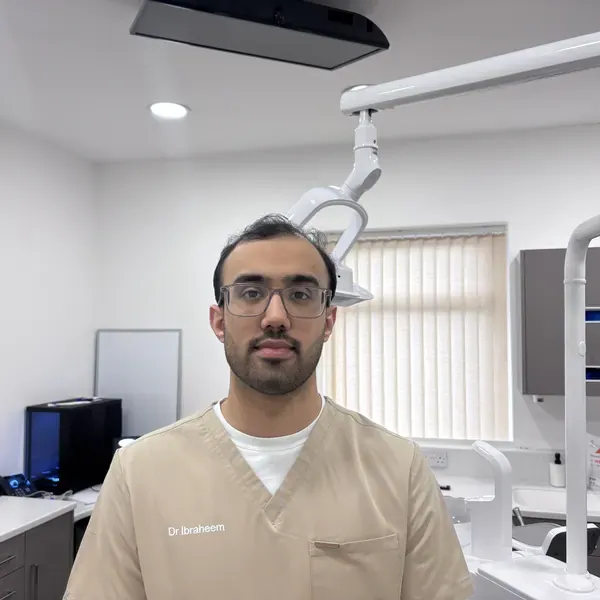 Clinically reviewed by Dr Ibraheem Ijaz, Principal Dentist · GDC 301711 · 500+ implants placed · Last reviewed August 2026
Medical disclaimer: This page is for general information only. It does not replace an examination or treatment by a dentist.
What happens when you replace a failed dental implant?
Replacing a failed dental implant means removing it, letting the site heal, rebuilding bone if needed, then placing a new implant. The process is staged, not same-day.
Patients who arrive after an implant has failed are rarely asking only about the procedure. They want to know whether a second attempt is realistic for their situation, and that is the right place to begin.
A replacement follows a clear sequence. First, the failed implant is removed. A failing implant that has lost its bond with the surrounding bone is often straightforward to take out, though removal after late failure can be more involved. The site is then given time to heal, and your dentist assesses how much healthy bone remains. Where bone volume is insufficient, a graft may be placed to rebuild the area before a new implant can be supported. Only when the bone is stable and healthy is a second implant positioned. Throughout, the priority is understanding why the first implant failed, because that reason shapes every decision that follows. If the cause is not identified and addressed, a second implant faces the same risks as the first. For how a problem implant is investigated in the first place, see the diagnostic steps after a suspected implant failure.
Why do dental implants fail and need replacing?
Dental implants fail in two ways, early and late, defined by whether the implant had bonded to bone before failing. The cause guides the replacement plan.
Early failure happens before the implant is functionally loaded and reflects a problem with osseointegration, the process by which bone fuses directly to the implant surface. Common contributors include overheating of the bone during placement, insufficient initial stability, surgical site contamination, or poor bone quality. Late failure occurs after the implant has integrated and been in function, and the most frequent cause is peri-implantitis, an inflammatory condition that affects the gum and the supporting bone around an implant. Modifiable factors such as smoking, uncontrolled diabetes, and a history of gum disease are recognised in clinical research as raising the risk of implant problems. Identifying which type of failure occurred, and why, is the single most important step before considering a replacement, because it determines whether the same site can be reused and what needs to change to protect a second attempt.
How is the site re-assessed before a second implant?
Re-assessment before a second implant centres on a CBCT scan, a 3D X-ray showing the bone remaining at the site. This guides whether and where a new implant can be placed.
A standard two-dimensional X-ray cannot show bone width or the position of nearby structures with enough detail for revision planning. A CBCT scan maps the site in three dimensions, allowing your dentist to measure remaining bone, check the relationship to nerves and the sinus, and plan the safest position for a new implant. You can read more about how CBCT scanning creates a 3D map of your jaw before surgery. Alongside imaging, your dentist reviews your medical history, gum health, and any factors that contributed to the first failure. This combined picture determines whether a replacement is straightforward, whether grafting is needed first, or whether an alternative restoration would serve you better.
Ask whether this treatment fits your case.
When is a bone graft needed before re-implantation?
A bone graft is needed before re-implantation when too little healthy bone remains at the site to support a new implant securely. Not every case requires one.
When an implant fails, particularly through peri-implantitis or a difficult removal, some surrounding bone can be lost. If the remaining bone is too narrow or too shallow, a graft rebuilds the volume so a future implant has a stable foundation. Grafting can sometimes be carried out at the time the failed implant is removed, or as a separate stage that heals before the new implant is placed. Healing after a graft generally takes a number of months, with your dentist confirming timing once the site has been reviewed. More detail on the techniques involved is covered on the page explaining when bone grafting is necessary before implant placement.
What is the timeline and success rate for a second attempt?
A second implant is rarely placed the same day a failed one is removed. The full process usually spans several months, depending on healing and whether grafting is required.
Whether the site can re-integrate a new implant depends on how it heals and how much bone is available. Systematic reviews report survival of roughly 86 to 92 percent for implants placed at a site of one previous failure, with one large clinical study finding around 96 percent survival for first replacements. The honest balance is that a replacement implant carries a somewhat higher risk than an original placement, and survival falls further if a site has already failed twice. In clinical practice, most second-attempt concerns come down to why the first implant failed rather than to the implant itself, and once that cause is understood and managed, the outlook usually improves. This is why careful re-assessment matters so much, and why addressing the original cause, such as stopping smoking or controlling gum disease, genuinely helps. Many patients who have experienced one failure go on to have a stable, lasting second implant.
How much does it cost to replace a failed implant?
The cost of replacing a failed implant depends on what each case needs, so it is best given as a range. Assessment and any bone work are usually separate from the implant itself.
At Deepcar Dental Care, an implant consultation is from £100 and is redeemable against treatment, with a CBCT scan from £150, and the implant component from £2,400. Where bone rebuilding is needed, bone grafting starts from £500. Because every replacement is different, a personalised plan is provided after assessment; a full breakdown is available on the page covering what's included in a dental implant cost quote. Interest-free and longer-term finance options are available to spread the cost.
Ask whether this treatment fits your case.
Are replacement implants available on the NHS?
Replacement dental implants are not routinely available on the NHS. Funding is reserved for specific cases of medical necessity, assessed in a hospital setting, so most patients access replacement treatment privately.
The NHS provides implants only in exceptional circumstances, such as significant trauma, cancer treatment, or certain congenital conditions, and these are evaluated by hospital restorative or maxillofacial teams. Routine replacement of a failed implant for general tooth loss falls outside this remit. For most people in and around Sheffield, a replacement is arranged through a private practice that offers dental implant treatment at our Sheffield practice, where the assessment, any grafting, and placement can be managed in one place.
How we approach replacing a failed implant
Our approach to a failed implant begins with assessment, not assumptions. Understanding the original cause comes before any decision about a second attempt. Dr Ibraheem Ijaz has placed and restored more than 500 implants and manages revision cases in-house, with maxillofacial support available for complex situations. Many patients tell us the procedure felt more comfortable than they expected. You will receive a clear, honest recommendation and a full explanation of your options, without pressure.
Questions, answered
Frequently asked questions
Can a dental implant be placed in the same spot as a failed one?
Often, yes, but not always immediately. A new implant can usually go in the same site once it has healed and has enough healthy bone. If bone has been lost, a graft may be needed first. A CBCT scan determines whether the existing site can be reused or needs rebuilding.
How long after an implant fails can you get a new one?
A replacement is rarely same-day. After removal, the site typically needs weeks to months to heal, and longer if a bone graft is required first. Your dentist confirms timing once healing is assessed. Rushing a second implant before the site is ready increases the risk of another failure.
Is replacing a failed implant painful?
Replacing a failed implant is carried out under local anaesthetic, and many patients find removal and re-placement more comfortable than they anticipated. Mild soreness and swelling for a few days afterwards is normal and usually managed with standard pain relief. Your dentist will explain what to expect for your specific case.
Does a second implant fail more often than the first?
A replacement implant carries a slightly higher risk than a first-time implant, but success rates remain good for most patients. The risk rises if a site has failed more than once, which is why identifying and addressing the original cause is essential before trying again.
What if a second implant is not advisable?
If repeated failure or limited bone makes another implant unwise, alternatives such as a bridge or denture can restore function and appearance. Your dentist will discuss these openly so you can choose what suits your situation. The goal is a stable, lasting result, not a second attempt at any cost.
Ready when you are
Next step
If you have worked through the questions on this page, you likely have a clearer picture of whether a second implant is the right direction for you. The next step is a conversation with a clinician who can assess your specific site and history.