Treatment
Life With Dental Implants — What to Expect at 1 Week, 3 Months, 1 Year and Beyond
This page is for anyone deciding on dental implants who wants to know what daily life with them is actually like. It maps the real experience from the first week through to five years and beyond. The core takeaway: a healed implant functions and looks like a natural tooth, and most people stop noticing it within the first year.
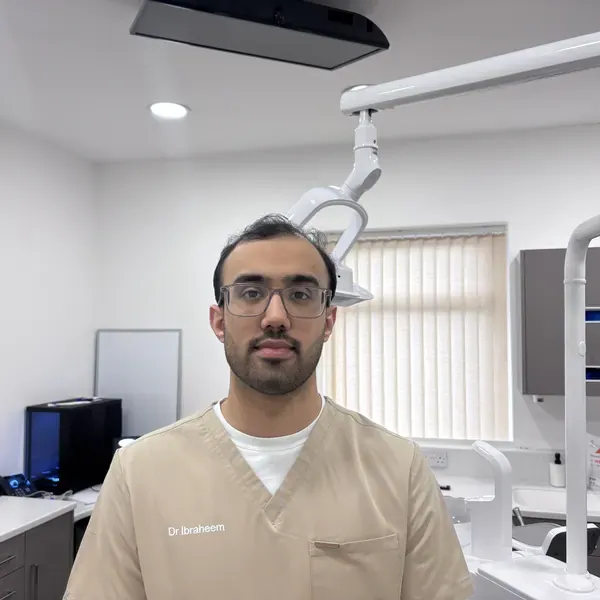 Clinically reviewed by Dr Ibraheem Ijaz, Principal Dentist · GDC 301711 · 500+ implants placed · Last reviewed August 2026
Medical disclaimer: This page is for general information only. It does not replace an examination or treatment by a dentist.
Do dental implants feel natural?
Yes, a fully healed dental implant feels natural for everyday eating and speaking, though its sensation is not identical to a natural tooth.
Once the implant has fused to your jawbone and the final crown is fitted, it sits, bites, and looks like a normal tooth. Most patients chew, talk, and smile without thinking about it. The difference sits below the surface. A natural tooth is held by a periodontal ligament, a thin layer of tissue carrying nerve endings that sense fine pressure and the exact position of your bite. An implant has no ligament. It bonds straight to bone, so that delicate pressure feedback is reduced rather than fully reproduced. In practice this means the implant feels solid and dependable, and the small sensory difference fades into the background as your body adapts.
Most patients who ask whether implants feel natural are really asking whether they will be able to forget about the tooth and just live, and that is the standard we plan toward from the first appointment. If you are replacing one tooth, it helps to understand how a single implant looks and feels compared to your natural tooth before treatment so your expectations match the outcome.
Why a healed implant feels solid: osseointegration
Osseointegration is the process where your jawbone fuses directly to the implant surface, creating a stable foundation that supports normal biting force.
This bone fusion is what gives an implant its strength and the sense that it is genuinely part of you. The titanium fixture is placed into the jawbone, and over the following months bone cells grow onto its surface, locking it in place. Because there is no periodontal ligament between bone and implant, the fine proprioception of a natural tooth is not present. Instead, the body restores a partial sense of touch and load through a phenomenon clinicians call osseoperception, drawing sensory information from the surrounding bone, the jaw joint, and nearby muscles. Evidence suggests this feedback is real but less sensitive than that of a natural tooth. The result is functional and reliable: you can sense pressure and chew with confidence, and the brain adjusts over time so the implant feels like your own.
In practice, the brain's ability to adapt is one of the most reassuring parts of the process, and it is why the early sense of something new rarely lasts.
Ask whether this treatment fits your case.
What affects how natural your implant feels
How natural an implant feels depends on healing, jaw position, the quality of the crown, and how you adapt over time.
Lower jaw bone is denser and often integrates a little faster than the upper jaw, which can shape how quickly the area feels settled. The fit of the final crown and the precision of the bite adjustment matter too, because a well balanced bite feels comfortable and a high one does not. Individual factors play a part: general health, healing response, and whether you are replacing a single tooth or several. Time is the quiet variable, as the sensation that feels slightly new in the first weeks becomes ordinary as you adapt. If you want the appointment level view of how the stages fit together, the full treatment timeline from first consultation to final crown sets out each step.
Life with implants, milestone by milestone
Life with an implant changes in stages, from early adaptation in week one to settled, unremarkable daily function after the first year.
Week 1, adaptation. The early days are about healing the gum and getting used to the area. Mild awareness, slight swelling, and a preference for softer foods are normal. Comfort at this stage is encouraging, but it is not the same as full healing, because the bone is still doing its work underneath.
Month 3, integration settling. During the integration period most people feel very little. The implant is bonding quietly to the bone, conventionally over roughly three to six months. Many patients reach the point where the permanent restoration is fitted and the bite starts to feel normal rather than new.
Month 6, natural bite. With the final crown in place and integration complete, biting feels stable and confident. This is usually when people stop adapting and simply use the tooth. Chewing on that side no longer requires a second thought.
Year 1, dietary freedom. By the one year mark most foods are comfortable again, and many patients say they have genuinely forgotten which tooth is the implant. A patient's journey from missing tooth to confident smile is often clearest here, as shown in a patient's journey from missing incisor to confident smile.
5+ years, maintenance. With good daily cleaning and regular professional reviews, the implant stays a low effort part of life, much like caring for a natural tooth. For the durability picture over the long run, the data on implant longevity is among the strongest in all of dentistry.
Risks and limitations to know long term
The main long-term risks are gum inflammation around the implant, known as peri-implant disease, and a permanent difference in fine pressure sensation.
Peri-implant mucositis and peri-implantitis are inflammation of the tissues around an implant, and the evidence links them strongly to plaque build-up and smoking. They are largely preventable with thorough daily cleaning and routine professional checks, and they are usually manageable when caught early. The sensory difference is not a complication but a limitation to expect: without a periodontal ligament, an implant will not regain the full fine touch of a natural tooth, though most people adapt completely. In clinical practice, most problems around an implant develop slowly and are picked up at routine reviews, which is exactly why those appointments matter as much as the surgery itself. Persistent pain, looseness, or gum swelling around an implant at any stage should be reviewed by your dentist promptly rather than left.
Questions, answered
Frequently asked questions
Will I be able to eat normally with a dental implant?
Yes, once your implant has fully integrated you can eat almost anything you did before. The first week or two calls for softer foods while the gum heals. After the final restoration is fitted and the bone has fused, biting and chewing feel stable, and most patients return to a normal varied diet.
Will other people be able to tell I have an implant?
In most cases no. A well planned implant crown is colour matched and shaped to blend with the surrounding teeth, so it is designed to be indistinguishable in normal conversation. The aim of careful aesthetic work is a result that simply looks like a healthy natural tooth, with nothing to give it away.
How long until my implant feels like my own tooth?
Patients often ask this because the answer varies, and the variation is real, since adaptation depends on the individual and the bite. For many people the implant feels settled within a few months of the final crown being fitted, and fully ordinary by around the one year mark as awareness of the area fades.
Do dental implants last forever?
The fixture itself can last many years, with clinical studies reporting high survival well beyond a decade, while the crown on top may eventually need replacing. Longevity depends heavily on daily cleaning and regular reviews. With good care, an implant is among the most durable tooth replacements available.
Does an implant need special cleaning?
Yes, an implant needs the same daily brushing and cleaning between teeth as a natural tooth, plus implant specific professional reviews. Maintenance is the single biggest factor in long-term success, helping prevent the gum inflammation that can affect the tissues around an implant over time.
Can a dental implant be rejected later?
Implants are not rejected like a transplanted organ, because titanium is biocompatible. Late failure is uncommon and is usually linked to untreated gum infection around the implant, smoking, or uncontrolled health conditions. Most issues are preventable and treatable when identified early through routine checks.
If you have worked through what each stage feels like, you likely have a clearer sense of whether implants are the right direction for you. The honest next step is a conversation with a clinician who can assess your specific situation rather than a generic case.
Ready when you are
Book your implant assessment.
Online in under a minute, or call and speak to a real person.