The science
Implant Brands: Straumann, Nobel Biocare and Osstem
This page is for anyone comparing dental implant brands before treatment. It explains what separates Straumann, Nobel Biocare and Osstem, what surface technologies like Straumann SLActive actually do, and which systems Deepcar Dental Care places. No brand has been shown to outperform another in a direct trial, so planning and placement matter more than the name.
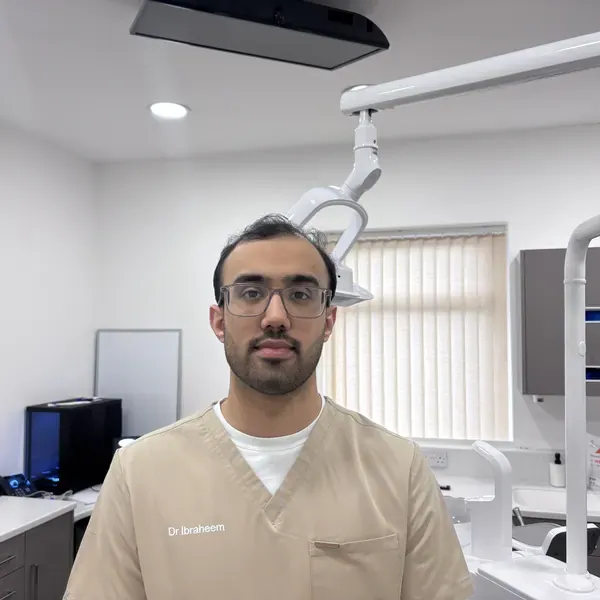 Clinically reviewed by Dr Ibraheem Ijaz, Principal Dentist · GDC 301711 · 500+ implants placed · Last reviewed August 2026
Medical disclaimer: This page is for general information only. It does not replace an examination or treatment by a dentist.
Straumann vs Nobel Biocare: is one better?
No published trial has directly compared Straumann and Nobel Biocare against each other, so no evidence-based winner exists.
The closest thing to an answer comes from a 2005 review in the International Journal of Oral and Maxillofacial Implants, which pooled manufacturer-submitted clinical data across six major systems including both brands. It found substantial equivalence on five-year survival, with a pooled rate of 96 per cent across more than 7,000 implants, and reported that articles directly comparing one system against another could not be found. Most of the underlying evidence came from case series rather than controlled trials.
That review is now two decades old, and both manufacturers have developed their surfaces since. What has not changed is the absence of head-to-head comparison: no trial of the two systems against each other was identified in the sources reviewed for this page. The differences that genuinely separate them sit elsewhere, in surface technology, in how much independent long-term follow-up exists, in component availability decades later, and in cost.
Both are long-established systems with substantial clinical records. The decision that changes your outcome is not which of the two goes into your jaw, but whether the case is planned properly, placed accurately and restored well. If you are still working out what implant treatment involves before comparing manufacturers, our guide to how dental implants work covers the treatment itself in full.
What Straumann SLActive, Nobel Biocare and Osstem each offer
Straumann SLActive, Nobel Biocare and Osstem differ mainly in surface technology, depth of independent evidence and price positioning.
Each is examined below on the same three measures, so the comparison holds across all three manufacturers.
Straumann
Straumann is a Swiss manufacturer whose SLActive surface (a chemically modified, water-attracting version of its earlier sandblasted and acid-etched titanium surface) is designed to speed the earliest phase of healing. Because the surface attracts water rather than repelling it, blood and bone-forming cells reach it sooner after placement. Research in humans has shown greater bone contact around hydrophilic surfaces than conventional ones during the first weeks of healing. That evidence is why the surface is discussed in cases where integration speed matters clinically. It does not translate into a published survival advantage at five or ten years over other established systems.
Nobel Biocare
Nobel Biocare is a manufacturer founded on the Branemark research that established osseointegration (the fusion of living bone to the implant surface) as a treatment principle. Its systems are among the most widely distributed and most extensively documented in implant dentistry, and its data formed part of the 2005 pooled analysis that found no differences between major systems. What the sources reviewed for this page did not yield was an isolated, independently published survival figure for Nobel Biocare alone.
Osstem
Osstem is a South Korean manufacturer that has grown rapidly and competes at a lower price point. Published clinical data exists but is more recent and narrower in scope than for the older systems. A single-centre study of 2,474 Osstem implants followed for at least five years reported 98.3 per cent survival, with peri-implantitis the leading cause of the failures recorded. A smaller series of 96 implants reported 94.8 per cent survival. Single-centre retrospective studies carry more bias risk than randomised trials, so these figures indicate that the system performs credibly rather than proving it matches the older brands.
Most patients who ask about implant brands are really asking a narrower question: does the price difference between systems buy anything real. It is a fair question, and it is not answered by a brand name on its own.
How implant brands are regulated and tested in the UK
Every implant system sold in Great Britain, including Straumann SLActive, must be registered with the MHRA and carry a valid conformity mark.
Registration with the Medicines and Healthcare products Regulatory Agency is mandatory before any medical device reaches the Great Britain market. A UKCA mark indicates that a device conforms to the requirements of the UK Medical Devices Regulations 2002 and is fit for the purpose its manufacturer states. This is a genuine safeguard, but it is a floor rather than a ranking. Every legitimate system on the UK market clears it, so conformity marking tells you a system is lawful to place, not that it is superior.
Dental implants themselves are not routinely available on the NHS. NHS guidance treats them as complex elective reconstructive treatment, funded only in narrow circumstances such as tooth loss following trauma or cancer treatment, which means most patients comparing brands are comparing options in private care.
Bench testing is often presented as if it settled the quality question. Implant systems are fatigue tested to ISO 14801, which loads an implant at an angle, usually 30 degrees, sometimes with part of the thread deliberately exposed to simulate bone loss, then cycles that load until failure. The standard is designed to compare implants of different designs and sizes under laboratory conditions rather than to predict how any implant will perform in a patient's mouth.
Strong fatigue data means an implant is mechanically sound by design. It says nothing about how it will behave in your jaw, under your bite, with your gum health, over twenty years.
Want this explained for your own case? Book a consultation.
What platform switching changes, and what it does not
Platform switching means fitting an abutment narrower than the implant head, a design feature separate from surface treatments such as Straumann SLActive.
The idea is straightforward. The abutment (the connector between the implant and the crown) meets the implant at a microscopic join, and bone tends to recede slightly around it. Moving that junction inward, away from the outer edge of the implant, shifts the inflammatory zone away from the crestal bone. Platform-switched configurations are widely available across established implant systems.
The evidence supports a modest, measurable benefit. A 2010 meta-analysis in the Journal of Periodontology, covering ten studies and 1,239 implants, found platform-switched implants lost around 0.37 mm less marginal bone than platform-matched ones, with no significant difference in implant failure between the two configurations. A separate meta-analysis reported a similar figure of 0.34 mm. A 2025 systematic review reached the same conclusion and went further, judging that although differences in bone loss between designs were statistically significant, they were not clinically relevant.
Platform switching is therefore a sensible design feature rather than a decisive one. It is a reason to prefer a particular configuration within a system, not a reason to choose one manufacturer over another, since the feature is broadly available. The same logic applies to surface treatments and material grades, which are covered in more depth in our page on the material science behind implant longevity.
Which implant systems Deepcar Dental Care uses
Deepcar Dental Care places Straumann, Nobel Biocare, Neodent, Dentium and Sweden Martina, choosing the system to suit each case rather than stocking one brand.
Osstem is not among the systems we place. That is a stocking decision, not a judgement on the manufacturer, and we have included it on this page because it appears constantly in brand comparisons and patients deserve a straight account of it.
Working with several systems rather than one is deliberate. Bone volume, position in the arch, aesthetic demand and whether an implant is being loaded immediately all influence which system and which configuration is appropriate. A case in the aesthetic zone with thin tissue asks different things of an implant than a molar replacement in dense bone. Committing to a single manufacturer would mean fitting the case to the inventory instead of the other way round.
Planning, placement and restoration are carried out at the practice rather than split between providers, so there is a single point of contact throughout treatment. Patient feedback from implant treatment here is published on our reviews page. For Dr Ijaz's implant training, case volume and the planning equipment used at the practice, see the implant brands we stock and why we chose them.
Want this explained for your own case? Book a consultation.
The limits of choosing an implant by brand
Brand is a weak predictor of implant success, and surface technologies such as Straumann SLActive influence early healing more than long-term outcome.
The most useful evidence here comes from registry data, meaning large national records that follow ordinary patients treated by ordinary clinicians rather than selected patients in a manufacturer-funded trial. A Swedish registry study published in the Journal of Dental Research in 2016 re-examined 588 patients nine years after implant treatment and found peri-implantitis (inflammation with bone loss around an implant) in 45 per cent of patients when defined broadly, and moderate to severe disease in 14.5 per cent. An earlier analysis of the same population recorded implant loss in 7.6 per cent of patients across those nine years.
Implant brand was one of the factors associated with peri-implantitis risk in that data. So were the patient's periodontal condition, having four or more implants, the position of the implants in the jaw, and the type of clinician delivering the prosthetic work. The largest single-brand series reviewed for this page, covering 2,474 implants followed for at least five years, also recorded peri-implantitis as its leading cause of failure. Gum health and maintenance appear to dominate late outcomes regardless of manufacturer.
In clinical practice, the problems that surface years after an implant is placed are far more often about the health of the gum and bone around it than about the fixture underneath.
There is also a practical question that brand comparisons rarely raise. An implant is meant to last decades, and over that time the crown, the abutment or a retaining screw may need replacing. Those components are system-specific, so a replacement has to match the original implant. Asking a provider how long they have placed a particular system, and how widely it is distributed, is a more useful question than asking which brand is best. If you are weighing up providers rather than manufacturers, our guidance on how to choose an implant dentist sets out what to check.
Questions, answered
Frequently asked questions
Is Straumann SLActive worth the extra cost compared with a budget implant brand?
Straumann SLActive has evidence supporting faster early bone integration, which can be clinically valuable in demanding cases. There is no published evidence that it survives longer than other established systems. Whether the difference justifies the cost depends on your case, and your dentist should explain that reasoning.
Which implant brand has the best success rate?
No brand can claim the best success rate, because no trial has compared the major systems head to head. Pooled analysis of long-term clinical data found established systems substantially equivalent at five years. Success rates published by individual manufacturers come from separate studies with different patients, protocols and follow-up periods.
Should I ask my dentist which implant brand they are using?
Yes, and you are entitled to have it recorded in your notes. Knowing the system and the exact implant reference matters if a component ever needs replacing, particularly if you move or change dentist. Ask for it in writing at the treatment planning stage rather than afterwards.
Are Korean implant brands like Osstem safe?
Any implant system placed in Great Britain must be registered with the MHRA and carry a valid conformity mark, so ask your provider to confirm the specific system. Osstem has published clinical data including a series of 2,474 implants showing 98.3 per cent survival at five years, though that evidence is single-centre.
What happens if my implant system is discontinued?
Components are system-specific, so keep your implant records including the system name and reference number. A clinician can still work with a discontinued implant, but having the documentation makes any future repair considerably more straightforward, particularly if you change dentist.
Can I choose my own implant brand?
You can express a preference, and a good clinician will discuss it. Brand selection criteria in practice are led by your bone, the position of the tooth and the loading plan. If a preferred brand is not clinically appropriate for your case, your dentist should explain why rather than simply accommodate the request.
The brand question matters less than most comparisons suggest. The more useful next step is a conversation with a clinician who can look at your bone, your bite and your priorities, and tell you which system fits the case in front of them.
Explore our full range of dental implants at Deepcar Dental Care.
Ready when you are
Book your implant assessment.
Online in under a minute, or call and speak to a real person.